- →The median UGC video in 2026 runs about $175 to $200, with ~80% of rates under $500
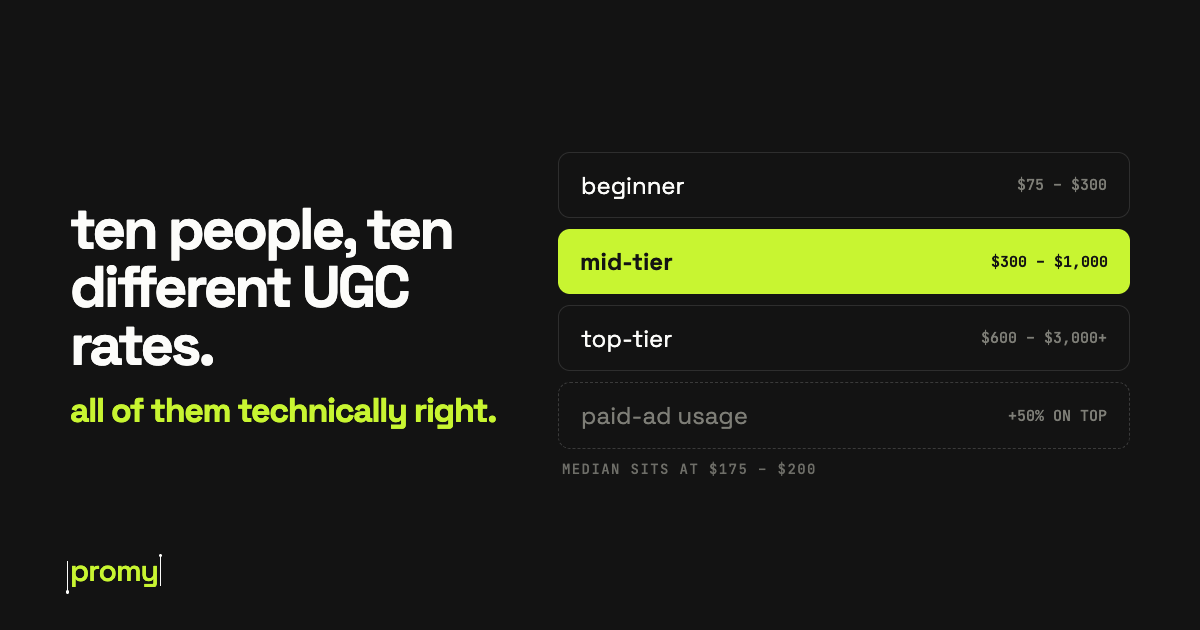
- →Three tiers: Beginner ($75-$300), Mid-tier ($300-$1,000), Top-tier ($600-$3,000+)
- →Always separate the creation fee from the usage fee, paid-ad usage adds ~50%
- →Retainers drop per-video rates 15 to 30% and win for both sides at volume
- →Niche, rush fees, trending formats, and a rate card all move a rate up or down
If you ask ten people what a UGC video costs, you'll get ten answers between $50 and $3,000, and all of them are technically right. That spread is the whole problem. A creator doesn't know what to charge, a brand doesn't know what's fair, and both walk into the conversation half-guessing.
So let's fix that. Here are the real 2026 numbers, where they come from, and what actually moves a rate up or down, whether you're setting your price or approving someone else's invoice.
The One Number to Anchor On
The median UGC video in 2026 runs about $175 to $200. Influencer Marketing Hub's benchmark data, drawn from hundreds of brands, puts roughly 80 percent of per-video rates under $500, with the heaviest cluster in the $150 to $300 range.
Notice it's the median, not the average. Averages lie here, because one creator charging $3,000 and one working for free average out to a number neither of them would recognize. The median, what the middle creator actually charges, is the honest anchor. Around $175 to $200 for a solid, reliable video is the center of gravity in 2026. Everything below is about why a given video costs more or less than that.
The Three Tiers, and What You Actually Get
The market has settled into three tiers. The gap between them isn't just polish, it's turnaround, revisions, and how much hand-holding the project needs.
| Tier | Per Video | What You Get |
|---|---|---|
| Beginner | $75 to $300 | Portfolio but limited client history. Good content, simpler editing, 5 to 10 day turnaround. Where brands test UGC with little downside. |
| Mid-tier | $300 to $1,000 | 50+ completed projects, reliable comms, cleaner editing, faster turnaround. The sweet spot for most brands running ongoing UGC. |
| Top-tier | $600 to $3,000+ | Deep portfolios, proven performance, specialized niche. Worth it when content goes straight into paid ads. |
By platform, the pattern holds: TikTok videos often sit a little lower because they're shorter, Instagram Reels command more for the added polish brands expect, and YouTube UGC runs highest because it's longer-form. Static images and carousels cost less than any video.
The Line-Item Everyone Forgets: Usage Rights
Here's where most pricing conversations quietly go wrong. The creation fee and the usage fee are two different things, and lumping them together costs somebody money.
The base rate covers making the video and the brand posting it on their own organic feed. The moment that video goes into paid ads, the rate changes, because now the content is working much harder and reaching far more people. Standard 2026 add-ons: paid ad usage for 30 days adds roughly 50 percent on top of the base, and a full buyout, unlimited perpetual use, can add $1,000 or more per deliverable.
The rule both sides should follow: always separate the creation fee from the usage fee, in writing. A creator who bundles them gives away paid-ad rights for free. A brand that doesn't ask ends up unsure what it's even allowed to do with the footage. Name the usage up front and price it as its own line.
Where Rates Bend
A few things reliably push a number away from that $175 to $200 anchor.
- →Niche matters more than most creators think. Finance, tech, and other specialized categories command a premium because the audience is worth more and credible creators are rarer.
- →Rush fees are real. A 48-hour turnaround instead of a week typically adds 25 to 50 percent, because it wrecks the creator's schedule.
- →Trending-style content, current audio and formats brands specifically ask for because it performs, carries a modest premium of its own.
- →A professional rate card genuinely pays. Creators who price from a structured card rather than negotiating on the fly report meaningfully higher earnings, because structure stops you undercharging in the moment.
The Move That Saves Brands the Most: Retainers
The clearest pricing shift in 2026 is toward retainers, and it's the best deal on the table for both sides.
Commit to a monthly volume, say four to twelve videos, and per-video rates drop 15 to 30 percent below one-off pricing. The creator gets predictable income and stops re-pitching every month; the brand gets a reliable content pipeline and a lower unit cost. For any brand spending over about $2,000 a month on UGC, a retainer is almost always the more efficient structure. Predictability is worth a discount to the creator and worth locking in for the brand.
Reading This as a Creator vs. as a Brand
Same numbers, two lenses.
If you're a creator: the anchor is around $175 to $200, but don't sit there by default. Price to your tier, charge usage rights separately and without apology, build a rate card so you stop leaving money on the table mid-conversation, and use retainers to turn one-off clients into stable monthly income. Underpricing to win a deal usually just trains a client to expect the low rate forever.
If you're a brand: budget realistically. A common planning frame is monthly video count times your tier's per-video rate, then add 30 to 50 percent if the content is going into paid ads, plus a 10 to 20 percent buffer for revisions and reshoots. Eight mid-tier videos a month at $500 is $4,000 in base content, closer to $5,500 to $6,500 all-in once usage and buffer are counted. And reserve some budget to test new creators, not every fit works, and a fresh pipeline is worth the occasional miss.
The Honest Bottom Line
UGC pricing isn't actually confusing once you separate the pieces: a median anchor around $175 to $200, three clear tiers, usage rights priced on their own line, and retainers for anyone doing real volume. The confusion only survives because most people negotiate blind. Now you don't have to.
One structural note worth making, since it changes the math: the whole per-video model exists because the content's value is hard to measure up front, so both sides guess at a fair fixed price. Performance-based campaigns approach it from the other end, you pay against what the content actually delivers in verified views and engagement rather than a flat guess per clip. It's a different way to think about the same spend, and for brands tired of paying the same rate whether a video lands or flops, it's worth understanding alongside the standard rate card above. The benchmarks on what creators charge per 1,000 views make that comparison concrete.