- →Bio link CTRs sit near 1%, but TikTok still drives sales through search, screenshots, and dark social
- →49% of US consumers and 64% of Gen Z use TikTok as a search engine
- →Last-click attribution credits Google or direct traffic for demand TikTok created
- →Measure branded search lift and incrementality, not just clicks
- →TikTok Shop and Spark Ads are the two places clicks actually convert at scale
Here's a contradiction that breaks most marketers' brains.
TikTok users barely click links. Bio link click-through rates hover around 1%. Most people watch a video, feel something, and keep scrolling. They don't tap. They don't leave the app.
And yet, products sell out the day after a video takes off. Brands report search spikes, sold-out inventory, and revenue jumps they can't trace back to a single click.
So if nobody's clicking, how does anything actually sell? The answer is that the TikTok funnel doesn't work the way your analytics dashboard assumes. The conversion is real. It's just invisible to last-click tracking.
TikTok Is a Search Engine Now
Start here, because this is the part most brands miss.
49% of US consumers now use TikTok as a search engine. Among Gen Z it's 64%. Google usage among Gen Z has dropped nearly 25% compared to older generations. People aren't Googling "best sourdough starter" anymore. They're typing it into TikTok and watching a real person demonstrate it in 60 seconds.
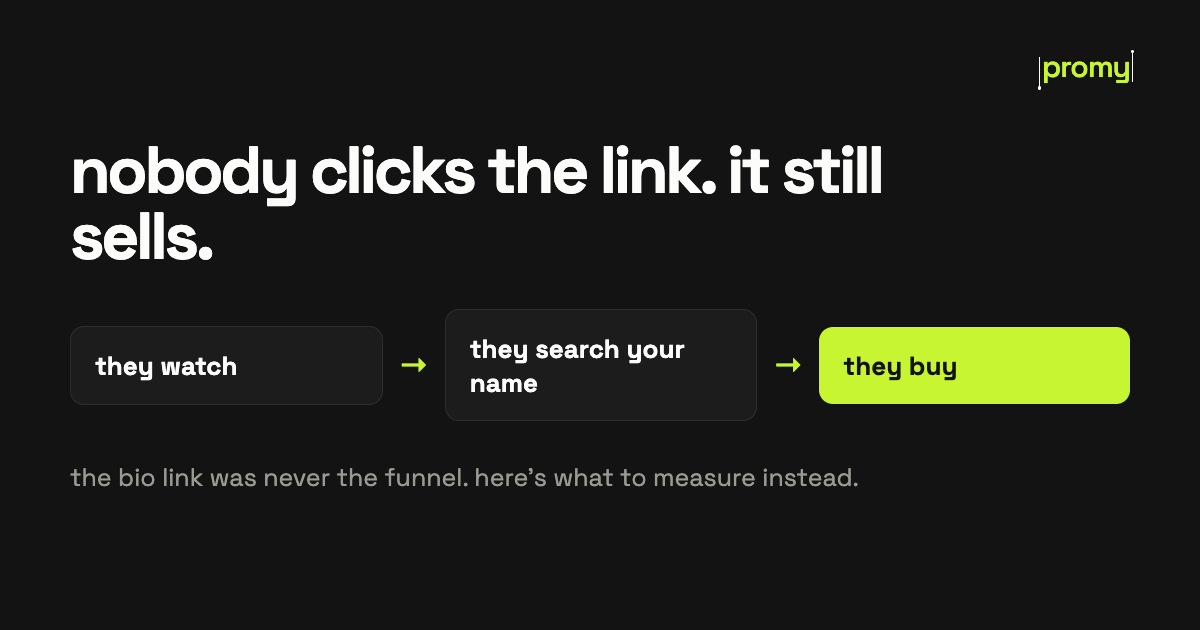
This changes everything about how purchases happen. A user sees your product in a creator's video. They don't click anything. But three days later, when they're ready to buy, they open TikTok (or Google) and search your brand or product name directly. They convert through "search," and your analytics give Google or direct traffic the credit. TikTok, the thing that actually created the demand, shows up nowhere.
The Invisible Funnel
Here's what actually happens between "saw the video" and "bought the thing." None of it shows up as a TikTok click.
1. Watch, then search. The most common path. Someone watches a creator feature your product, doesn't act in the moment, then searches your name later when intent builds. The video planted the seed. The search harvested it. Last-click credits the search.
2. Screenshot and Google. Users screenshot a product they like and look it up later, often on a different device. The purchase happens on desktop, hours later, with zero connection to the original TikTok session.
3. Dark social. They send the video to a friend in DMs or a group chat. "We need this." The friend buys. That sale traces back to nothing measurable. The video did the work in a conversation you'll never see.
4. The validation loop. Discovery rarely happens on one platform anymore. Someone sees your product on TikTok, checks Reddit for real opinions, watches a YouTube review, then buys. By the time they reach checkout, TikTok looks like an early "assist" your attribution model probably ignores entirely.
In every one of these, the preference was formed on TikTok and the conversion was recorded somewhere else. The search looks rational. But the decision was already made before the user ever typed anything.
Why Last-Click Makes TikTok Look Bad
Most brands measure TikTok with tools built for a click-based internet. Last-click attribution gives 100% of the credit to the final touchpoint before purchase, which on TikTok is almost never TikTok itself.
The result: brands systematically undervalue TikTok, see weak "direct" ROAS, and underinvest in the channel that's quietly driving their demand. They're optimizing against a number that's structurally wrong for how the platform works.
The fix isn't a better link. It's better measurement.
Track branded search lift. When a campaign runs, does search volume for your brand or product spike? That's the clearest signal TikTok is working, even when clicks are flat.
Use incrementality testing. Run the campaign in some regions, hold it out in others, and compare total sales. The difference is TikTok's real contribution, clicks or not.
Watch the assist, not just the close. Look at view-through conversions and assisted pathways, not only the final click. TikTok lives at the top and middle of the funnel, where last-click is blind.
The One Place Clicks Actually Work
There's an exception worth knowing. The closer the purchase is to the video, the more clicks matter.
TikTok Shop collapses discovery and purchase into a single moment. The product is tappable inside the video. No bio link, no leaving the app, no three-day search delay. This is why TikTok Shop conversion rates can exceed 10%, while external landing page campaigns sit at 0.5-3%. Friction is the difference.
And Spark Ads add a clickable CTA button to organic creator content (something organic posts don't have), giving high-intent viewers a direct path while the content still looks native. If you need trackable, click-based conversion on TikTok, these are the two tools that actually deliver it.
What This Means for Your Strategy
Stop judging TikTok by its click-through rate. It was never going to win that game, and that's not the game it plays.
TikTok's job is to create demand: to make people want your product, remember your name, and search for it when they're ready. That demand shows up as search lift, direct traffic, sold-out inventory, and sales your dashboard credits to other channels. If you only count clicks, you'll conclude TikTok doesn't work and you'll be wrong, right before a competitor who measures it properly takes the market.
The brands winning on TikTok understand the funnel is invisible by design. They create great creator content that plants demand, they measure the lift instead of the link, and they use TikTok Shop or Spark Ads when they need the click to be there.
Nobody clicks. Everybody buys. Once you understand why, TikTok stops being a mystery and starts being the most underpriced demand engine in marketing.