- →TikTok decides in ~1.5 seconds. Top hook type averaged ~2x the views of the lowest across 34,635 clips
- →Ten patterns hold: Result First, Identity Call, Contrarian, Open Loop, Confession, Mistake Warning, Number, Mid-Action, POV, List Tease
- →Q2 2026 update weights 3-second retention over total watch time. Early hold beats long hold
- →Specificity is the whole game. Narrow identity, odd numbers, named symptoms beat generic curiosity
- →A hook is a promise. Match it to what the video actually delivers or completion tanks
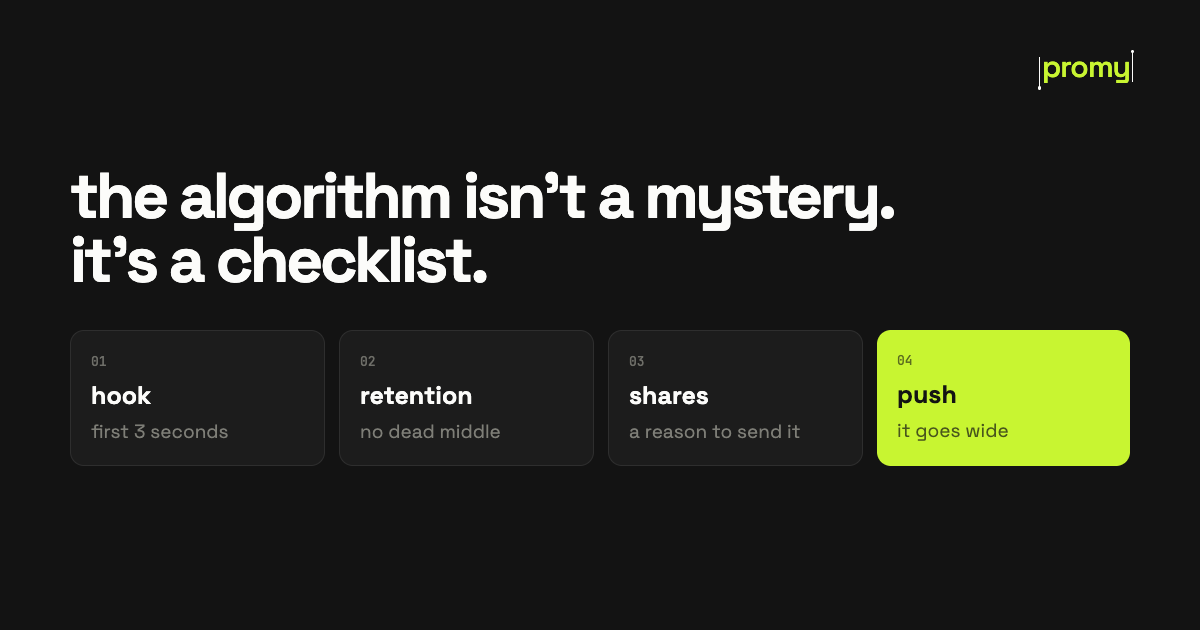
TikTok's algorithm makes its first call on your video in about 1.5 seconds. Miss it and you're in a cold start you almost never escape. Land it and the algorithm starts widening your audience, and compound distribution does the rest.
That's not a theory anyone needs to argue about anymore. In an analysis of 34,635 clips from early 2026, the top-performing hook type averaged 6,037 views per clip, roughly double the lowest-ranked type. Same content categories. Same creators. The variable was the opening line.
So we went through it all: the clip studies, the retention testing, the published playbooks from creators who went zero to millions. Then we checked the patterns against what we've watched work across our own campaigns and added the hooks that earned their place.
Ten patterns survived. Here they are, and here's what separates them from everything that doesn't work anymore.
The 10 that hold
Result First. You lead with the outcome. The finished dish, the number, the transformation. The viewer knows within two seconds what they get if they stay, and that certainty is what earns the scroll. This is the highest-performing type in the data, roughly 2x the weakest.
Identity Call. Name a specific person so precisely they feel seen. "If you're a creator" is weak. "If your last five videos got under 300 views" is strong, because it names the exact number someone is staring at on their own screen right now.
Contrarian Strike. Challenge something the viewer believes. Disagreement activates threat evaluation in the brain, so they stay to be proven right or wrong. Both outcomes are retention.
Open Loop. Open a question and refuse to close it. The brain needs resolution, so scrolling feels like walking out of a movie. Works best when the loop closes inside 20 seconds.
Confession. Admitting something costly buys instant trust. In a feed of highlight reels, vulnerability reads as real because it's rare and it costs you something to say.
Mistake Warning. Triggers self-reflection and mild alarm. The viewer pauses to check whether they're the one doing it. Name the specific symptom, not the category: "your skincare routine is wrong" is forgettable, "you're washing your face at the wrong time" isn't.
Number / Stat. A specific, odd number reads as measured. $4,200 outperforms $4,000 because round numbers feel invented and precise ones feel earned.
Mid-Action. Start as though the video already began. No greeting, no setup. The viewer feels they walked in on something, which is the exact opposite of the "Okay so..." opener that wastes your first two seconds resolving nothing.
POV / Relatable. Instant recognition. The viewer sees their own life in frame one. Raw, phone-native delivery of this pattern gets around 31% higher engagement than production-heavy versions.
List Tease. A numbered promise creates micro-commitments. "I'll just watch for number one" becomes watching all five. Strong save-rate driver, and saves weigh heavily in distribution.
What changed in 2026 (and killed a generation of hooks)
TikTok's Q2 2026 update moved weight from total watch time to 3-second retention. That one change rewrote the rules.
The math now: a video holding 80% of viewers for 3 seconds typically out-distributes one holding 60% for 30 seconds. Early hold beats long hold. Your first two seconds are worth more than your next twenty.
Which means these don't just underperform anymore, they actively kill the video:
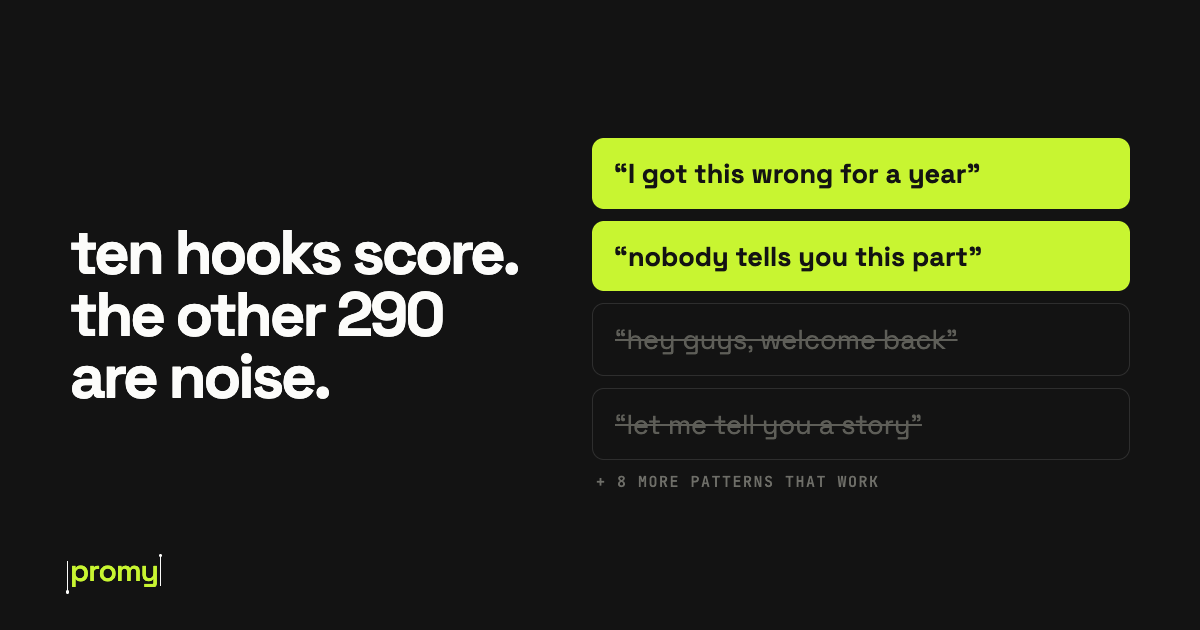
- →"Hey guys, so today I wanted to talk about..." A warm-up, not a hook. Loses roughly 70% of viewers before you've said what the video is about
- →"Let me tell you about the time..." Requires trust the viewer hasn't given you
- →"Okay so..." Two seconds spent resolving nothing
- →"Have you ever wondered..." Forces mental work before you've earned attention
- →"In today's video, we're going to..." YouTube's format on a platform that isn't YouTube
If any of those are in your current template, that's the first thing to fix. It's free and it's immediate.
The pattern behind the patterns
Read the ten again and one thing is underneath all of them: specificity.
Every hook that works, works because it's specific. The number is odd. The identity is narrow. The mistake is a symptom, not a category. The confession costs something. Generic curiosity now reads as spam, because viewers have been trained by a decade of clickbait to recognize it instantly.
The other thing: a hook is a promise. Every pattern here triggers a legitimate impulse, curiosity, recognition, self-protection, disagreement. But a hook that promises what the video doesn't deliver tanks your completion rate, because people leave the second they realize the payoff isn't coming. The algorithm notices, and it stops pushing you.
So pick the hook that matches what your video actually does. Compelling and accurate beats clever and hollow, every time.
We turned all of it into a free library
Reading about patterns is one thing. Having 300 usable lines in front of you at 11pm when you're trying to film is another.
So we built the library: 300 hooks, 30 for each of the ten patterns, across 14 niches. Searchable, filterable, one tap to copy. Every one written to use as-is, not a template full of blanks to fill in. It also includes the dead hooks and the mechanism behind each pattern, so you can eventually write your own instead of borrowing ours.
It's free, there's nothing to sign up for, and there's no email gate.
Why we bothered
We run performance-based campaigns, which means creators on Promy earn from verified views and engagement rather than follower count. A better hook holds more people, the algorithm pushes further, and the same effort earns more.
On a flat-fee platform, your hook is a craft detail. Here it's the difference between a video that earns $15 and one that earns $1,200.
That's why we built this properly and gave it away. Better hooks are just better for everyone in this model.